How Latin Became Europe’s Common Tongue
Did you know that you use Latin words more than you think? Words like animal and hospital may feel like everyday English, but their roots lie in ancient Rome. Even your morning coffee, a café in Paris or a caffè in Rome still traces back to the Latin tongue.
For centuries, Latin was the language that bound Europe together, in temples, palaces, classrooms, and courts, everywhere. Long after the Roman Empire fell, Latin continued to influence new forms, and much of that voice is still in our speech today. As Roman legions marched, so did their language. From Spain to the Balkans, people heard Latin in law courts, markets, and army camps. The spoken version, Vulgar Latin, seeped into daily life. Over time, it broke apart into today’s Romance languages.
The Survivor after Rome
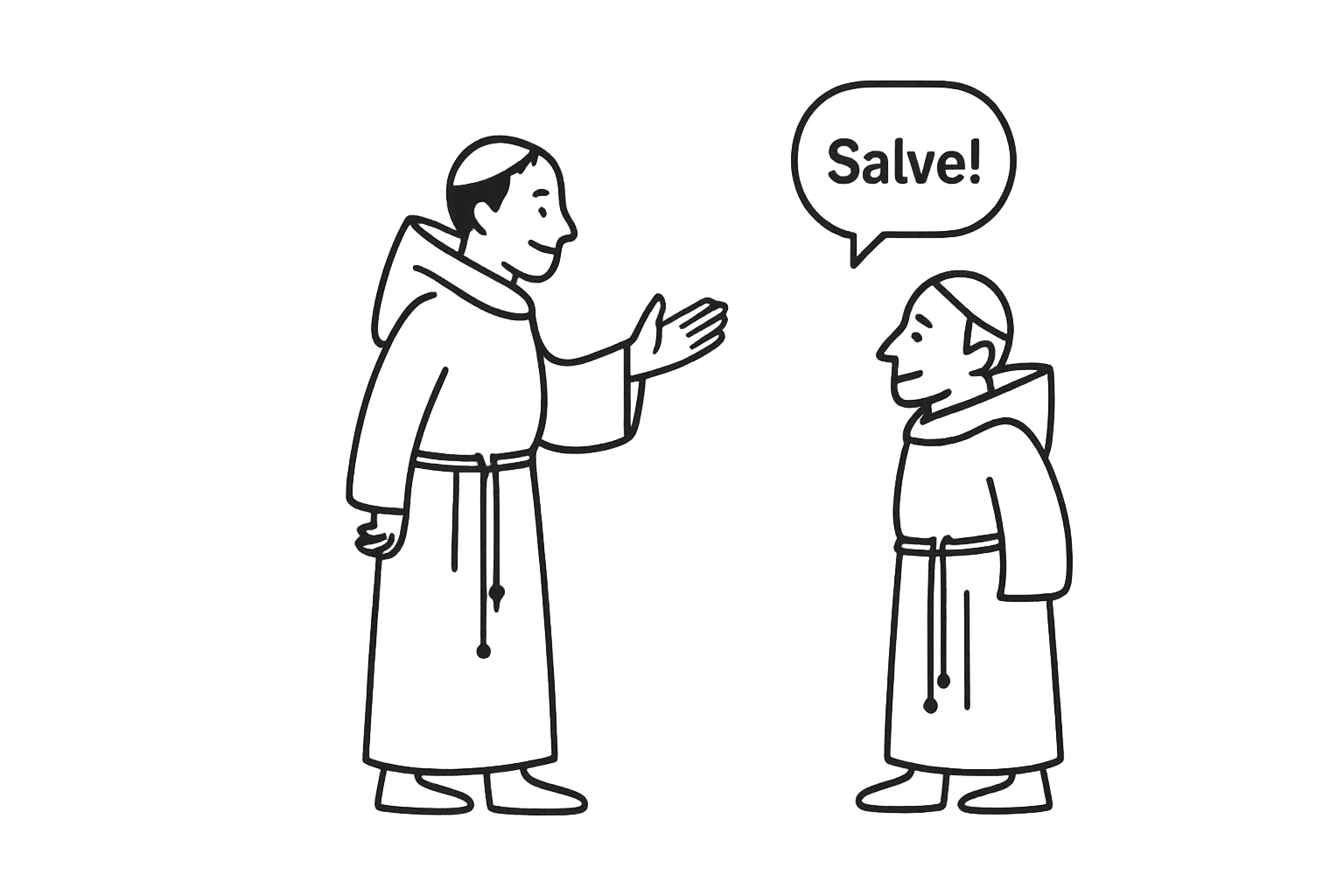
When Rome collapsed, Latin should have gone with it. But it didn’t. Instead, it switched roles: no longer the villagers’ tongue, but the continent’s shared written code. Monks copied manuscripts in Latin, universities lectured in Latin, and popes and kings issued laws and treaties in Latin.
For instance, a scholar in Paris could write to one in Kraków, and they’d understand each other perfectly even if their spoken French and Polish were worlds apart. Latin was Europe’s email before email.
How Ancient Latin Words Still Live in Modern Languages
Although Latin is a “dead language,” its voice is everywhere. Many of the simplest, most ordinary words we use, from water to road, trace straight back to Rome, and you can see Latin’s fingerprints across French, Spanish, Italian, and even English. Here are some examples:
- aqua → Spanish agua, Italian acqua, French eau, English aquarium
One of the easiest roots to recognise. Aqua splashes into all the Romance languages, each bending it slightly, while English tucked it into learned words like aquarium.
- luna → Italian luna, Spanish luna, French lune, English lunar
This one hardly changed at all. The Latin luna shines almost intact in every major Romance language, with English borrowing it for scientific use in lunar studies.
- mater → French mère, Spanish madre, Italian madre, English maternal
pater → French père, Spanish padre, Italian padre, English paternal
Here we see Latin’s family ties. Mater and pater morphed in sound but stayed loyal in meaning.
- terra → Italian terra, French terre, Spanish tierra, English territory
The Romans used terra for land and earth. Romance languages still use it daily, while English has grown it into terms like territory and terrestrial.
- via → Italian via, Spanish vía, French voie, English via
Short but enduring. Via meant “road” in Latin and still means “road” or “way” in most European languages. English borrowed it directly, and now we use it for everything from travel (via London) to technology (via email). So, it’s a tiny word with a surprisingly long journey.
These Latin roots are living fossils.
They show how Latin still breathes in Europe’s languages.
From Europe’s Common Tongue to Legacy
By the Renaissance, writers like Dante and Luther began pushing their own languages into the spotlight. Printing presses helped Italian, German, French, and later English rise to the top. Yet Latin never truly left. It left fingerprints everywhere: in our dictionaries and in the shared roots of Europe’s vocabularies.
So next time you say video call, agenda, manual, labour, status quo, etcetera, remember: you’re borrowing the voice of an empire that has been gone for 1,500 years. Latin was Europe’s common tongue and, in many ways, it still is.